Ending with Eve

As the discussion leader for this, I read and analyzed the two readings.

This is for “Eve’s Apology in Defense of Women”.

Lanyer seemed to put the blame on men. Eve ate the forbidden fruit and Adam did as well.

But surely Adam cannot be excused;

Her fault though great, yet he was most to blame;

While reading this, I saw the rhyme scheme was a, b, a, b, a, b, c, c.

This is for Milton’s Paradise Lost.

Paradise Lost was speaking about the falling of humanity and how sin came to be. It also went on about Adam and Eve, the first biblical characters and how the serpent tempted Eve to eat the forbidden fruit. These two readings have strong Biblical references.

Renaissance Lyric

Christopher Marlowe’s “The Passionate Shepherd to his Love” indicates how he want his love to be with him and enjoy the natural setting.

Maybe something like this?

This area seems surreal like how Marlowe describes his setting in the poem.

In Sir Walter Raleigh’s “The Nymph’s Reply to the Shepherd”, he implies the opposite and that love doesn’t last forever. It changes just like how seasons change.

When I was thinking about love from these poems, I saw this quote on line

 This quote was really sweet. Maybe this is what the shepherd wants to give his lover?

Sonnets

Sonnet – a poem of fourteen lines using any of a number of formal rhyme schemes, in English typically having ten syllables per line.

Sir Thomas Wyatt’s “They Flee from Me” speaks about passion, anger, longing, and pain from women.

  Passion  Anger

“Thanked be fortune it hath been otherwise

Twenty times better; but once in special,

In thin array, after a pleasant guise,”

– Sir Thomas Wyatt “They Flee from Me”

Sir Philip Sidney’s Astrophil and Stella speaks about the anatomy of love and its contradicting views: hope and despair, tenderness and bitterness, exultation and modesty, bodily desire and spiritual transcendence (Greenblatt, Abrams 975).

Faerie Queene

My notes on Faerie Queene on Canto 3

Una represents innocence and purity. Duessa reminds me of someone who is conceiving and cunning. These women are different in many ways. Una is an innocent and beautiful woman and follows the Redcrosse Knight around on his journey. She helps him and advises him along the way especially the one of the den of Error. However, Duessa is the one who tricks the Redcrosse Knight and have him think she is the beautiful Fidessa and she follows him on his journey after he leaves Una.

Una reminds me of an angel, a pure and kind spirit who brings fortune.

While Duessa reminds me of a devil, who is tricky and tempting.

Doctor Faustus

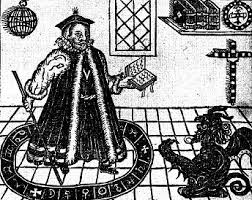
I came across this modern rendition of a group of students who created a film trailer for Doctor Faustus.

I wondered why Faustus, a man with great knowledge and wisdom, want more and would make a deal with his life to Lucifer. It doesn’t make sense to me. He decides to give up twenty four years of his life to Lucifer in trade for a book of spells. In other words, something similar to black magic.

For that security craves great Lucifer.

If thou deny it, I will back to hell.

Stay, Mephastophilis, and tell me,

What good will my soul do thy Lord?

Lady Jane Grey: Martyr or Traitor?

Lady Jane Grey died for treason against Queen Mary. She was beheaded. Once again, religion comes into play with this reading as well. When she spoke her last words, she stated that she will die “a true Christian” (675) and that she will be saved by “the mercy of God, in the blood of his only Son Jesus Christ” (675).

There is even a movie about Lady Jane Grey with her romance with her husband Lord Guildford Dudley and her Nine Day reign as queen.

Is Lady Jane Grey a martyr  or a traitor? Martyr is defined as “a person who is killed because of their religious or other beliefs” and traitor is defined as “a person who betrays a friend, country, principle, etc”.

Lady Jane Grey was only 16 or 17 years old at the time and I believe she was brave. She was an innocent girl and I believe she was a martyr instead of a traitor.

Utopia or dystopia?

Utopia is “a place of ideal perfection especially in laws, government, and social conditions”, according to Merriam Webster. Instead of a utopia, it’s more of like a dystopia.

Reminds me of Ray Bradbury’s Fahrenheit 451 that I read in high school. It was a dystopia. This comic is a twist on Fahrenheit 451.

Can we really have a utopia in a dystopian era?  Can everyone actually be happy and live in harmony, live in peace with each other? Can it really be attainable?

The pronunciation of “utopia” can just as well be associated with “eu-topia,” which in Greek means “happy place.” Happiness, More might have suggested, is something we can only imagine. – New York Times

I remember watching The Jetsons when I was young and wanting to have flying cars and all these cool gadgets. That was my dream and in a way my utopia when I was younger. I wanted to have everything that they had and they looked happy.

Choose: Faith or Marriage?

In “The Book of Margery Kempe”, Margery Kempe chooses between her husband and her faith with Christ. Her faith came in between her marriage life with her husband. It makes me think if she is suitable as a wife and as a mother.

A wife can still have a happy marriage and still have strong faith. Religion can bring people together or break them apart. Maybe if Margery Kempe and her husband shared the faith, they would have a happy marriage.

Religion seems to be important in medieval times. In The Dream of the Rood, it discusses Christ on the cross. Religion comes into play with a lot of the readings.

The Trinity is described as “our maker, the Trinity is our keeper, the Trinity is our everlasting lover, the Trinity is endless joy and our bliss….” – A Book of Showings, p. 374

I actually want to do something like this for my wedding, sing a duet with my husband. I think it’ll be nice and sweet!

Canterbury Tales

Pilgrimage – a pilgrim’s journey synonyms: religious journey, religious expedition, hajjcrusademission

Going on a religious journey to Canterbury must have been hard.

Reminds me of a time where I went on a church retreat in June 2015 and I was a Sunday School teacher.

A comic book version of The Canterbury Tales with a twist:

In Southwerk at the Tabard as I lay,

Redy to wenden on my pilgrimage

To Canterbury with ful devout corage,

At night was come into that hostelrye

Wel nine and twenty in a compaigyne

Of sondry folk, by aventure yfalle

In felaweshipe, and pilgrimes were they alle

That toward Canterbury wolden ride.

– Lines 20-27 (219)

The Dream of The Rood, The Wife’s Lament

Is this how the rood was described to look like?

This is how I imagined it looked and how it was described in the text. In the text, it states “I saw the tree of glory shine splendidly, adorned with garments, decked with gold: jewels had worthily covered the Lord’s tree.”

There is lots of meaning behind the cross. Christ died on the cross for us for our sins. The cross has meaning in Christianity. The cross heals our sins and the cross of Christ will protect us from things that come our way.

” The cross is the place where all the wounds of sin are healed. If you suffer from emotional problems–guilt, anxiety, depression, anger, or whatever–there is healing in the cross of Christ. ” – Bible.org

This comic strip seems like the modern English version of The Wife’s Lament.